We thought we would address a bit a of confusing subject in this blog post and try and shed some light on the differences between Landscape Architect, Garden Designer and Landscaper.
It’s a bit of a running joke in the Landscape Architecture world, that most people out there don’t really understand what we do. The classic scenario is going to a dinner party and as everyone goes round the room introducing their profession, the Landscape Architects are usually met with blank stares or at best confused with Landscapers. As result, most Landscape Architects out there are armed with a brief introduction of the profession, ready to be rolled out at a moment’s notice. This is the long version!
Landscape Architects

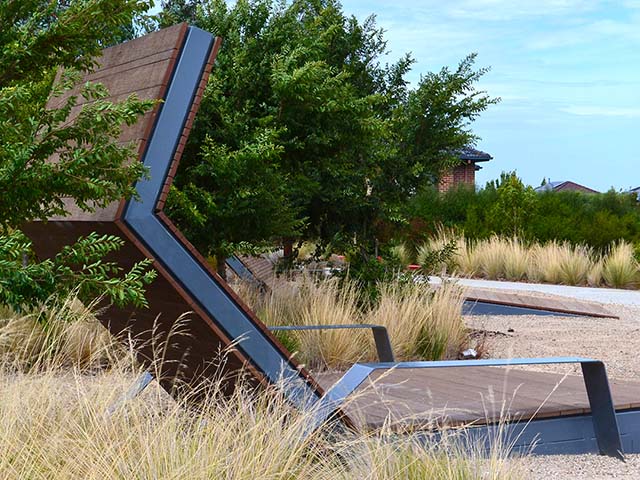
Landscape Architects are consultants who design parks, streetscapes, plazas, wetlands and other public spaces however their scope can be notoriously difficult to define. Yes they design with plants but not always, yes they design outdoor areas, but not always, they spend most of their time in front of computers but still often have a presence in the field. The primary focus is perhaps around crafting public space more than anything else, shaping the environments which they work within for the benefit of the people who use them and the natural world they form part of.
It is rare for Landscape Architects to view a project in isolation from the rest of the world. Part of their training is natural sciences and an understanding that natural systems do not obey title boundaries. People move through spaces, each bringing unique cultural needs that designers must accommodate. Animals also visit and leave these spaces, and their needs deserve thoughtful consideration as well. Plants affect air quality, temperate and carbon balance in a very broad extent surrounding a site. Rain that falls a site will find paths through it, potentially picking up pollutants along the way which may in turn cause impacts downstream and ultimately the ocean.
What skills do Landscape Architects have?
Landscape Architects are in some ways jack of all trades. The profession incorporates aspects of Ecology, Horticulture, Architecture, Project Management amongst others and fuses them into something else entirely. In addition they usually have a peripheral understanding of Civil Engineering, Structural Engineering, Quantity Surveying, Town Planning and many more in order to best perform their role. They tend to be a humble lot though and will always recognise the importance of working with other professions whenever they can.

To practice as a Landscape Architect, students typically complete a University degree, which usually takes around five years of study. In addition, an important (but not essential) step is to become a Registered Landscape Architect which requires workplace experience over a number of years as well as a deep understanding of the profession to gain. Landscape Architects have a professional body in Australia which governs this process as well as standards, ethics and policy of the profession called the Australian Institute of Landscape Architects (AILA).
Garden Designers

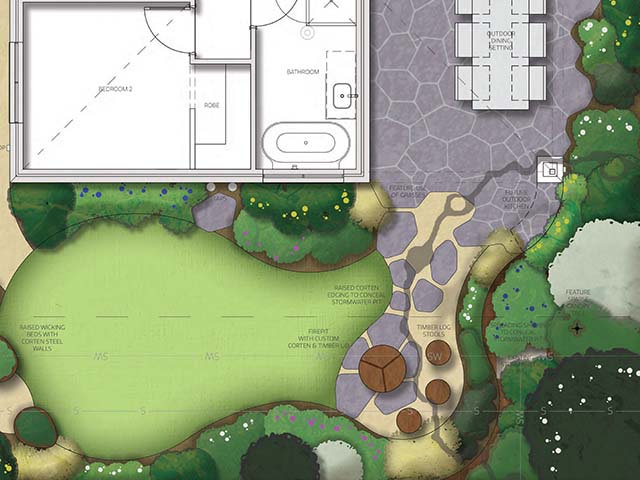
Garden Designers have very similar skill sets to Landscape Architects. They are first and foremost designers, working with both hard and soft elements to craft spaces. The fundamental difference comes in the scale at which they generally work and their focus, which as you may have guessed is generally the residential back yard.
While there are obvious similarities in appearance and function, back yards can be very different spaces to public parks. They are intimate, personal spaces which will usually have a much larger role in people’s day to day lives than the local playground or oval. Garden Designers achieve great outcomes by developing a strong understanding of their clients’ needs and desires for the space, making clear communication an integral part of their skill set.
What are Garden Designers strengths?
Garden Designers generally have excellent horticultural knowledge, it forming a fundamental part of their training. Gardens can at times offer limited opportunities for built form but planting is always a mainstay so an encyclopaedic knowledge of different plant species and their desired growing conditions is essential. In addition, garden designers will often expand their understanding firmly into peripheral horticultural knowledge like pests and diseases so they can inform their clients on how to keep their gardens looking their best. Good Horticultural knowledge is very much a badge of honour for Garden Designers.
Garden Designers generally are tertiary trained and hold some form of qualification, often including diplomas or certificates in Garden Design. It is not uncommon for horticulture-focused credentials to be held as well.
The Landscape Design Institute (LDI) is the primary professional body for Garden Designers, with Landscaping Victoria also having a role. While membership of these bodies is not a requirement of being a Garden Designer, both organisations help to establish a Code of Conduct for the profession, as well as furthering the public perception and knowledge of Garden Designers.
Landscapers

Simply put, our landscaper friends are the folks out there with a shovel, doing the hard work to make designs a reality. They bring the equipment, skills, and knowledge needed to complete a build, but they may still subcontract specialist elements of the project—such as concreting and stonemasonry—to other companies. A good landscaper will have a good handle on supply chains, knowing where to source the better quality or cost efficient materials to ensure you get the outcome you are seeking.
Most Landscapers will be able to provide basic design advice, with larger companies often having Garden Designers or Landscape Architects amongst their ranks so they can provide a one-stop service for clients. While many Landscapers view design as secondary or supportive to their construction services, some have still created amazing designs.
Landscapers know their stuff. By building projects every day, they develop a strong understanding of the nuts and bolts of getting a job done—and they generally know how to do it right. Landscapers will often come back to designers with alternate approaches, detailing, materials or products which will be more efficient to build or provide cost savings. This can provide options to clients which can be hugely beneficial where the project budget is sensitive.
What kind of Landscaper is right for me?
The landscaping industry tends to operate in defined tiers, but outsiders often find them difficult to identify.
- Most Landscapers start as small operations, bringing a trailer, tools, and perhaps a few machines to tackle straightforward projects with clear scope. For example, if you need fresh turf laid, this tier of Landscaper can complete the job quickly and efficiently.
- Another tier focuses on more substantial builds, often prepared by a designer but still at a backyard residential scale. This tier will often be slightly larger companies and able to provide design advice or have Landscape Architects or Garden Designers on staff.
- The final tier consists of commercial-scale landscapers who focus on constructing parks and public spaces. These large companies employ multiple professionals and often hold Registered Building Practitioner status. They typically don’t take on residential work but may handle larger projects.
There is of course always grey areas, with some companies operating across different markets.
So who do I pick?
Well…..Crux, naturally! But then we are slightly biased.😊
The answer, (like many things) is it depends. If you clearly know what you want, need simple advice, and/or want something built quickly, a landscaper may be your best fit. If you are looking for a complete rework of your garden or have a new build then a Landscape Architect or Garden Designer is likely the better option. Garden Designers are a good choice when your project has a larger horticulture component. For complex projects with built structures or if you need construction management, Landscape Architects may serve you better.
Some companies (like Crux!) focus on both Landscape Architecture and Garden Design, so the rules aren’t always hard and fast. Some Garden Designers work on public parks, some Landscapers are award winning designers in themselves. Importantly, as with anything, there are good companies out there and bad ones. Unfortunately regulation is somewhat lacking in corners of the industry which means there are a lot of cowboys. If you don’t know who they are, watch out for cost as a red flag—after all, the old saying goes: if you pay peanuts, you get monkeys!
We make it a point to always be up front and honest with our clients so if you’re unsure who will best fit your needs or want some general advice, contact us—we’ll do everything we can to help.